
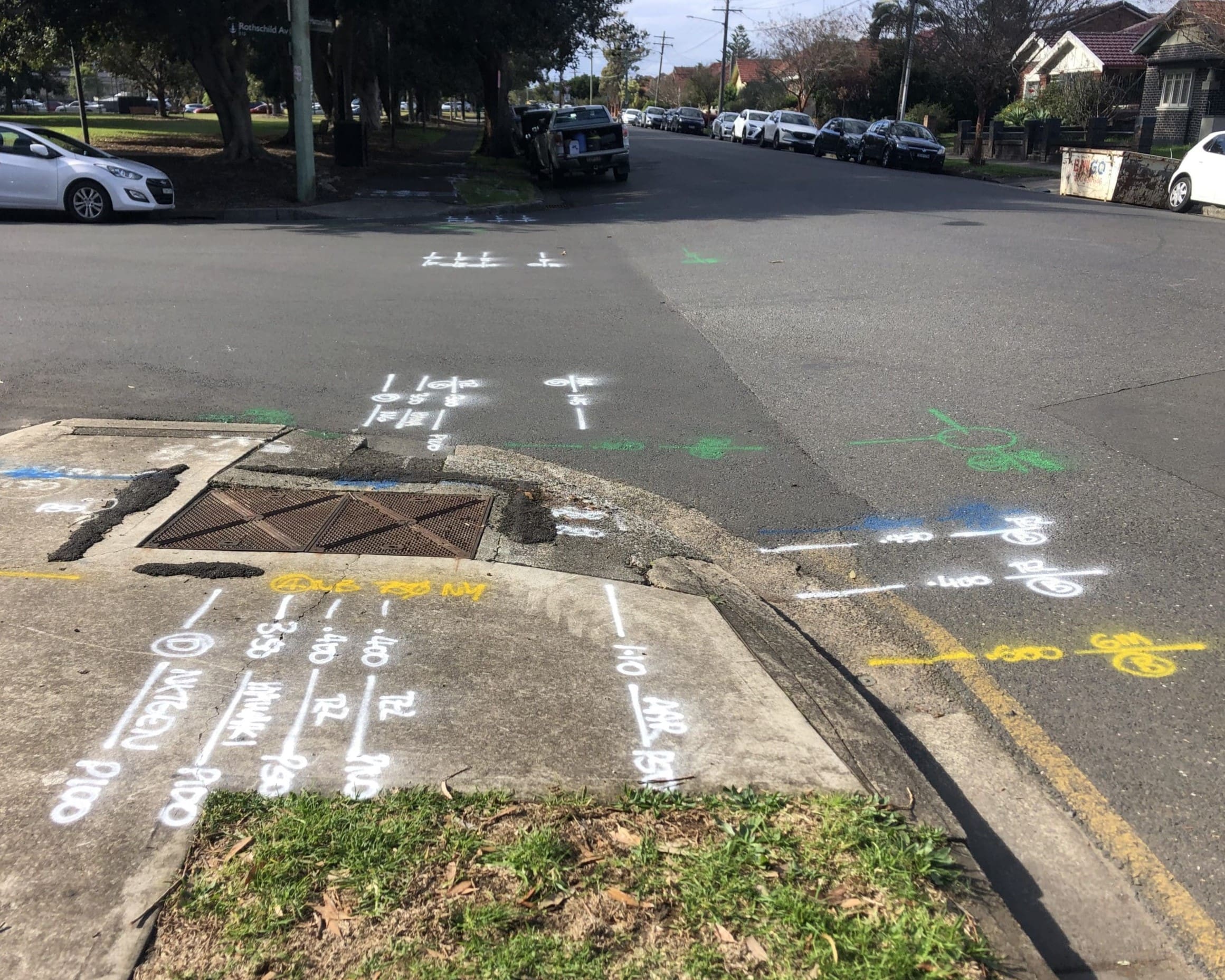
The True Cost of Utility Strikes: What NSW Contractors Actually Pay When Services Are Hit
Utility strikes cost the Australian economy $4.6 billion annually. When excavation equipment severs telecommunications cables, ruptures gas pipelines, or damages electrical infrastructure, financial consequences extend far beyond immediate repair bills. Research across 16 detailed utility strike case studies established a 29:1 ratio between total costs and direct repair expenses alone. A utility strike generating $10,000 in repair bills actually costs $290,000 when accounting for all financial impacts across direct, indirect, and social cost categories.
NSW contractors face emergency repair charges from asset owners, regulatory penalties from SafeWork NSW, project delay expenses, insurance deductible payments, and service interruption claims. Understanding these cost components helps assess return on investment for utility strike prevention through underground service locating versus strike risk exposure.
Emergency Repair Bills and Asset Owner Charges
Asset owners invoice contractors for full restoration costs when underground infrastructure sustains damage. Telecommunications companies charge emergency callout fees, specialized repair crew mobilization, and replacement materials. Severing a fiber optic cable serving commercial premises typically costs between $5,000 and $20,000 for physical repairs.
Gas pipeline damage creates charges beyond infrastructure replacement. Jemena and APA Group bill contractors for employee time conducting door-to-door safety inspections, re-igniting pilot lights across affected properties, and calculating escaped gas volumes based on pressure and leak duration. Volumetric loss calculations at current gas prices add substantial amounts to repair invoices.
Electrical cable strikes require Ausgrid or Endeavour Energy emergency response teams to isolate damaged sections, install temporary supply where feasible, and restore permanent service. High-voltage cable repairs involve specialized crews working under strict safety protocols, with costs escalating for complex underground electrical networks serving multiple properties.
Water main damage generates charges for emergency shutoff, property notification, temporary supply provision, and excavation access to buried pipes. Sydney Water invoices include environmental cleanup when contaminated water enters stormwater systems or causes erosion damage to surrounding infrastructure.
Project Delays and Idle Equipment Costs
Work stoppages following utility strikes create cascading financial impacts. A 20-tonne excavator hired at $800 per day generates $5,600 in unproductive costs during a seven-day repair period. Multiple machines on site multiply this expense rapidly. Labor crews placed on standby consume budget without advancing project completion, with daily costs for typical civil construction crews exceeding $3,000.
Liquidated damages clauses in construction contracts penalize missed milestones. Infrastructure projects commonly specify $5,000 to $25,000 daily penalties for schedule overruns. A utility strike causing ten days delay triggers $50,000 to $250,000 in contractual penalties before considering other costs.
Subsequent project phases experience delayed commencement when utility strikes extend current phase timelines. This domino effect impacts multiple subcontractors, equipment scheduling, and material delivery coordination. The compounding schedule disruption often exceeds the direct delay period by factors of two or three.
SafeWork NSW Penalties Under WHS Regulation 2017
Work Health and Safety Regulation 2017 establishes strict liability for excavation incidents involving underground utilities. SafeWork NSW inspectors issue on-the-spot penalty infringement notices for unsafe excavation practices, with corporate fines reaching several thousand dollars per violation.
Prosecution for serious WHS breaches carries maximum penalties of $250,000 for bodies corporate. Court proceedings examine whether the person conducting a business or undertaking implemented adequate risk management, obtained proper utility detection services, and followed strike cost reduction through AS5488-22 compliant utility detection protocols before excavation commenced.
Failure to immediately notify SafeWork NSW following a dangerous incident attracts penalties up to $50,000 for bodies corporate and $10,000 for individuals. Dangerous incidents include utility strikes creating immediate risk to persons, such as gas releases, exposed high-voltage conductors, or major water main ruptures flooding excavations.
Improvement notices and prohibition notices issued by SafeWork NSW inspectors halt work until compliance deficiencies are rectified. The associated downtime while implementing corrective measures compounds financial losses from the original utility strike incident.
Insurance Deductibles and Premium Increases
General liability insurance policies cover utility damage and third-party property claims, but deductibles for commercial construction operations range from $5,000 to $250,000, depending on company size and claims history. When repair costs fall below the deductible threshold, contractors pay the entire amount without insurance contribution.
Claims exceeding deductibles trigger premium increases at policy renewal. Multiple utility strike claims within a policy period can result in 20-40% premium increases or policy non-renewal, forcing contractors into higher-cost insurance markets. The long-term insurance cost impact often exceeds the immediate claim payout.
Insurance carriers scrutinize whether contractors followed Before You Dig Australia protocols, obtained professional utility location services, and implemented non-destructive digging verification where required. Demonstrating negligence allows insurers to deny claims or pursue subrogation against contractors who failed to take reasonable precautions.
When utility strikes cause third-party injuries or fatalities, settlement amounts or jury awards can exceed policy limits. Insurance companies reach policy limit exposure early in litigation, then withdraw, leaving contractors personally liable for remaining damages.
Service Interruption Claims from Asset Owners
Telecommunications companies pursue service interruption claims beyond physical repair costs. Telstra, Optus, and TPG maintain service level agreements with commercial clients specifying penalty payments for outages exceeding defined thresholds. A single fiber cut affecting business customers can trigger $50,000 to $500,000 in service-level agreement penalties, which carriers then invoice to the responsible contractor.
Electricity network operators factor revenue loss from interrupted supply into damage claims. Commercial and industrial customer disruption creates substantial billing. Manufacturing facilities experiencing production shutdowns due to power loss may pursue direct claims against contractors separate from asset owner charges.
Critical infrastructure services, including hospitals, data centers, and emergency services, maintain strict uptime requirements. Utility strikes affecting these facilities expose contractors to enhanced liability claims reflecting the critical nature of interrupted services. Settlement amounts in these scenarios significantly exceed standard service interruption calculations.
The 29:1 Cost Ratio: Hidden Expenses Beyond Repair Bills
Research analyzing detailed utility strike case studies revealed that total costs reach 29 times the direct repair amount. This ratio accounts for:
Direct costs paid by utility owners, including materials, labor, and emergency response. Indirect costs borne by contractors, including monetary fines, legal fees, and injury compensation. Social costs affecting third parties, including traffic delays, business income loss, and environmental remediation
Australian data shows 76% of utility strikes occur despite being preventable through proper investigation protocols. Contractors implementing systematic utility detection programs experience strike rates below 1 per 100 projects compared to industry averages of 3-5 strikes per 100 projects for those relying solely on BYDA desktop plans.
Prevention Investment Versus Strike Risk Exposure
Professional utility location services, including electromagnetic detection, preventing utility damage with ground penetrating radar detection, and vacuum excavation verification, typically cost $2,000 to $8,000 per project, depending on site complexity. This investment prevents the average $290,000 total cost exposure from a single utility strike.
The financial equation favors prevention: spending $5,000 on a comprehensive utility investigation eliminates $290,000 of potential strike costs. This 58:1 return on investment calculation excludes reputational damage, client relationship impacts, and opportunity costs from delayed project progression.
Utility Detection Methodology for Strike Prevention
Before You Dig Australia searches provide Quality Level D information showing approximate utility locations from asset owner records. This desktop data requires field verification before excavation proceeds near known utilities.
Electromagnetic locating and ground penetrating radar provide Quality Level B detection, marking utilities on the ground surface with spatial accuracy of ±300mm horizontal and ±500mm vertical. This detection method suits most excavation projects where utilities must be identified before digging commences.
Utility strike verification using non-destructive vacuum excavation delivers Quality Level A verification through physical exposure of utilities. Once exposed, utilities are surveyed to ±50mm tolerance, revealing exact depth, diameter, material, and condition. This verification becomes necessary for high-risk activities near critical infrastructure or when electromagnetic detection results show uncertainty.
Documentation Requirements for Liability Protection
AS5488-22 specifies mandatory documentation elements for utility detection work. Reports must state the Quality Level achieved, detection methods used, equipment specifications, and operator qualifications. This documentation demonstrates that reasonable precautions were implemented in case utility strikes occur despite investigation efforts.
When utilities are struck after following proper detection protocols, documented strike prevention through utility mapping and reporting provides evidence that adequate risk management was undertaken. Conversely, utility strikes occurring without proper investigation expose contractors to prosecution under WHS legislation and insurance claim denial.
NSW Project Applications
Smartscan Locators provides investigation services across NSW construction projects requiring utility strike prevention. BYDA-certified electromagnetic locating, Mala and Leica ground penetrating radar systems, and vacuum excavation verification deliver complete AS5488-22 compliance from Quality Level D desktop research through Quality Level A physical verification.
Equipment capabilities include Radiodetection RD8000 and Vivax Vloc3 electromagnetic locators for metallic utility detection, dual-frequency ground penetrating radar for non-metallic services including PVC water mains and concrete stormwater pipes, and vacuum trucks with dual gerni units for non-destructive excavation.
Survey-grade utility mapping integrates detected utilities into AutoCAD and 12D Model deliverables for design clash detection. Online accessible storage maintains organized investigation records throughout multi-stage projects, supporting data continuity from initial investigation through construction completion and works-as-executed documentation.
Contact Smartscan Locators at 1300 778 923 or [email protected] for utility investigation services preventing strike risk exposure on NSW construction projects.
Frequently Asked Questions
What does the average utility strike cost NSW contractors in 2026?
Direct repair costs range from $5,000 to $20,000 for telecommunications cables and electrical services, with gas and water infrastructure potentially exceeding these amounts. When accounting for project delays, regulatory penalties, insurance impacts, and service interruption claims, total costs reach 29 times the direct repair amount, averaging $290,000 per incident.
How can contractors prevent utility strikes on NSW construction projects?
Prevention requires a three-stage investigation: Before You Dig Australia desktop searches for existing utility records, electromagnetic and ground penetrating radar detection to mark utilities with ±300mm accuracy, and non-destructive vacuum excavation to physically verify utility positions before excavation commences. This methodology reduces strike probability by 76% compared to relying on desktop data alone.
Does general liability insurance cover utility strike damage in NSW?
General liability policies cover utility damage and third-party claims, but commercial construction deductibles range from $5,000 to $250,000. When repair costs fall below the deductible, contractors pay the entire amount. Multiple strike claims trigger 20-40% premium increases at renewal, and insurers may deny claims when contractors fail to follow Before You Dig protocols or obtain professional utility detection services.
What penalties does SafeWork NSW impose for utility strike incidents?
On-the-spot penalty infringement notices carry corporate fines of several thousand dollars for unsafe excavation practices. Prosecution for serious WHS breaches reaches $250,000 maximum penalties for bodies corporate. Failure to immediately notify SafeWork NSW of dangerous incidents attracts penalties up to $50,000 for corporations and $10,000 for individuals.
What return on investment does professional utility locating provide?
Comprehensive utility investigation costs $2,000 to $8,000 per project, depending on site complexity. This investment prevents $290,000 average total cost exposure from a single utility strike, delivering a 58:1 return on investment. Contractors implementing systematic detection programs experience strike rates below 1 per 100 projects versus 3-5 strikes per 100 projects for those using desktop plans only.